


Last Updated: October 25, 2026
Quick Summary
To evaluate fine dining quality, assess three interconnected pillars: ingredient integrity through sourcing and provenance, technical mastery in execution and consistency, and service precision in knowledge and pacing. These elements work together to distinguish intentional fine dining from expensive restaurants.
- Fine dining sourcing includes knowing supplier origins, seasonality, and ingredient authenticity like genuine wasabi root grated to order.
- Technique evaluation focuses on even cooking, intentional texture, and whether sauces enhance rather than mask poor-quality ingredients.
- Service excellence requires staff knowledge of menu provenance, attentive timing without hovering, and course pacing typically spaced 15 to 20 minutes apart.
- Plating precision signals respect through intentional garnish placement, negative space, and uniform slicing rather than decorative randomness.
- Atmosphere quality depends on appropriate noise levels for conversation, sufficient lighting to see food, and consistent temperature throughout your meal.
Table of Contents
- What defines fine dining quality
- Fine dining restaurant evaluation criteria that matter
- How to judge restaurant food quality during your meal
- Assessing service excellence and atmosphere
- Fine dining restaurant review checklist for your visit
- Questions to ask before booking a fine dining restaurant
- Making your reservation
- Frequently Asked Questions
What defines fine dining quality
Fine dining quality rests on three pillars: ingredient integrity, technical mastery, and service precision. These aren’t separate concerns, they’re interconnected. A restaurant that sources exceptional ingredients but executes them poorly won’t deliver a fine dining experience. Neither will one with flawless technique that treats service as an afterthought.
When you evaluate fine dining quality, you’re really asking: Does this restaurant respect the raw materials? Can the kitchen transform them? Will the staff guide you through it all?
The distinction matters because fine dining isn’t about expense or exclusivity alone. It’s about intentionality. Every choice, from the sourcing to the plating to the timing between courses, reflects a philosophy. That’s what separates fine dining from expensive restaurants.
Fine dining restaurant evaluation criteria that matter
Not all criteria carry equal weight. Some signal genuine quality; others are cosmetic. Understanding the difference helps you distinguish between restaurants that have earned their reputation and those coasting on ambiance.
Ingredient sourcing and provenance
Ingredient sourcing tells you everything about a restaurant’s priorities. Fine dining establishments don’t just buy premium ingredients, they know where they come from and why those sources matter.
Ask yourself: Can the restaurant tell you about its suppliers? Does the menu reference origin or seasonality? A restaurant that says “Scottish langoustine” instead of just “langoustine” is making a statement.
Japanese ingredients deserve particular attention. Wasabi, for instance: most restaurants use a horseradish paste coloured green. Genuine wasabi root, freshly grated, tastes entirely different, more delicate, less aggressive. A fine dining restaurant sources the real thing and grates it to order.
Seasonal menus also signal quality. A restaurant that changes its offerings based on what’s available, rather than sourcing the same ingredients year-round, is working with suppliers and respecting natural rhythms. This requires more planning, more relationships, more flexibility. It’s harder.
Technique and culinary execution
Technique separates intent from accident. A chef with genuine skill can take an ingredient and enhance it without overwhelming it.
When you’re evaluating a restaurant, think about the execution you observe. Is the protein cooked evenly, or are there hot spots? Are the vegetables crisp or waterlogged? Has the sauce been reduced to concentrate flavour or to mask poor-quality stock?
French technique and Japanese precision often work in tension. French cooking tends toward richness and reduction; Japanese cooking values clarity and restraint. A restaurant that blends both successfully shows mastery of each tradition.
Robatayaki charcoal cooking, in particular, demands skill. The grill’s temperature is unforgiving. A second too long and the ingredient burns. A second too short and it’s raw. This technique can’t hide poor execution.
How to judge restaurant food quality during your meal
The moment food arrives is when evaluation begins. You have three primary signals: flavour, presentation, and consistency.
Flavour balance and seasoning
Flavour balance reveals whether a kitchen understands restraint. Most amateur cooks oversalt. Most home recipes compensate for weak stock or poor ingredients by adding more seasoning. Fine dining kitchens do the opposite.
When you taste a dish, ask: Do the individual components shine, or do they blur together? Is there salt, or is there seasoning? Salt should enhance, never dominate. In French-Japanese fusion, this balance becomes critical. Soy sauce and miso bring umami; they’re easy to overuse. A kitchen that respects these ingredients uses them to amplify, not to mask.
Acidity matters equally. A squeeze of lemon or a touch of vinegar can lift an entire dish. A restaurant that understands this will balance richness with brightness. Without acidity, even premium ingredients feel heavy.
Presentation and plating precision
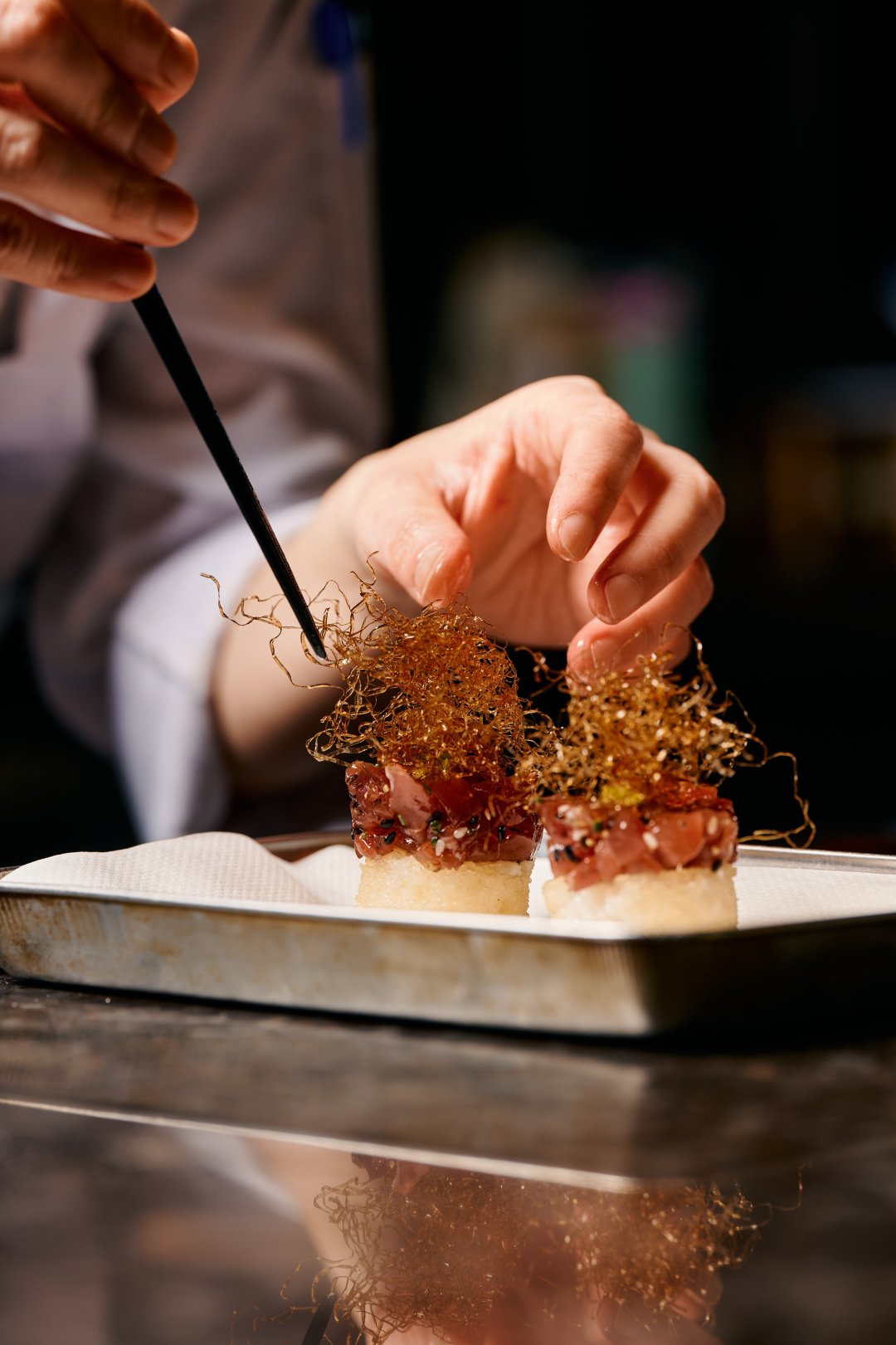
Plating signals respect for the diner and the ingredient. It’s not decoration for its own sake, it’s communication. How a dish is plated tells you how the kitchen thinks about each component’s role.
Look for intentionality. Are garnishes placed with purpose, or scattered randomly? Is negative space used to frame the dish, or is the plate crowded? Does the plating support eating the dish in a logical sequence, or does it create confusion?
In fine dining, precision matters. A quenelle of sauce should have clean edges. Microgreens should be oriented, not chaotic. Protein should be sliced uniformly. These details aren’t fussy, they demonstrate control and care.
Temperature and texture consistency
Temperature consistency across a dish separates competence from negligence. A steak should be warm throughout, not cold in the centre and hot at the edges. A sauce should reach the table at the right temperature to complement the protein.
Texture consistency is equally important. In a single dish, you might have multiple textures, crispy, creamy, tender. Each should be intentional. A restaurant that accidentally creates mushiness where there should be bite isn’t executing properly.
Pay attention to how components interact. Does a crispy element remain crispy, or does it soften from contact with sauce? Fine dining kitchens account for these dynamics. They might plate components separately or apply sauce strategically to preserve texture.
Assessing service excellence and atmosphere
Service and atmosphere create the context in which food is experienced. They’re not secondary to the meal, they’re integral to it.
Staff knowledge and attentiveness
Staff knowledge matters most. A server who can discuss the menu thoughtfully, who understands the provenance of ingredients, the technique behind a dish, the wine pairings, elevates the experience. They’re not just delivering food; they’re contextualising it.
Attentiveness means noticing without hovering. Your glass should be topped before you ask. Your course should arrive when you’re ready. The staff should be present without being intrusive. This balance requires training and awareness.
Watch how staff handles questions. Do they answer confidently or defer? Can they make recommendations based on your preferences, or do they recite the menu? A well-trained team knows the restaurant’s philosophy and can guide diners through it.
Pacing and timing of courses
Pacing reveals whether a kitchen and front-of-house are communicating. Courses should arrive at intervals that allow you to finish, digest, and anticipate the next one. Too fast feels rushed; too slow feels abandoned.
Fine dining typically spaces courses 15 to 20 minutes apart, though this varies by format. An omakase experience might move faster. A multi-course tasting menu might move slower. The key is intentionality, the pacing should serve the meal’s narrative, not feel arbitrary.
Ambiance and noise levels
Ambiance includes lighting, music, temperature, and noise levels. Fine dining typically favours lower noise, not silence, but an acoustic environment where conversation is possible without strain.
Lighting should be sufficient to see your food but not so bright it feels clinical. Music should enhance without demanding attention. Temperature should remain consistent throughout the meal.
Noise matters because it affects digestion and enjoyment. A loud room creates stress. Your body actually processes food differently in a high-stress environment. Fine dining restaurants account for this through design choices, soft furnishings, acoustic panels, strategic spacing.
Fine dining restaurant review checklist for your visit
Use this checklist to structure your evaluation during and after your visit:
- Sourcing: Can you identify the origin of key ingredients? Does the menu reference seasonality or provenance?
- Technique: Is cooking consistent across components? Are textures intentional?
- Seasoning: Does flavour balance enhance or overwhelm? Is acidity present?
- Plating: Is presentation precise? Does it communicate intent?
- Temperature: Are all components the right temperature?
- Service knowledge: Can staff discuss the menu confidently?
- Pacing: Do courses arrive at logical intervals?
- Atmosphere: Is the noise level appropriate for conversation?
- Consistency: Does the experience feel cohesive, or disjointed?
Questions to ask before booking a fine dining restaurant
Smart questions before booking prevent disappointment and help you find the right fit.
Menu structure and dining format
Ask whether the restaurant offers à la carte or tasting menu options, or both. This affects your experience fundamentally. À la carte gives you control; tasting menu gives you the chef’s vision. Neither is better; they’re different.
Inquire about the menu’s philosophy. Does it change seasonally? Does it reflect a particular cuisine or technique?
Ask about course count and timing. How long does a typical meal take? This helps you manage expectations and schedule.
Dietary requirements and customisation
Ask how the restaurant handles dietary requirements. Fine dining kitchens can usually accommodate allergies and ethical preferences, but they need notice. A restaurant that’s dismissive of these requests isn’t worth your time.
Inquire about customisation. Some restaurants build the menu around your preferences; others work within set parameters. Knowing this upfront prevents frustration.
Atmosphere and booking logistics
Ask about the atmosphere. See how Akaiito exemplifies fine dining quality to understand what to expect before booking. Is it intimate or social? Quiet or lively? Will you be seated at a counter, at a table, or in a private space? These details matter for the experience.
Confirm the booking process. Do they require a deposit? What’s their cancellation policy? How far in advance should you book? Are there dress code expectations?
Making your reservation
When you’re ready to book, you have key decisions to make. Learn about Akaiito’s philosophy and approach to understand whether the restaurant’s vision matches what you’re seeking.
[Understand Akaiito’s philosophy and approach before committing to a reservation. This helps you know whether the restaurant’s vision matches what you’re seeking.
A fine dining reservation is an investment in an experience. The best restaurants treat it that way, they prepare for your arrival, they remember your preferences, they guide you through their menu with intention.
The difference between a meal and an experience often comes down to how carefully both you and the restaurant have thought through the details. Start with these criteria. Ask the right questions.
Choosing a fine dining restaurant that truly delivers requires looking beyond reputation or price.
Frequently Asked Questions
What makes a fine dining restaurant high quality?
Quality fine dining combines exceptional ingredients, precise technical execution, refined service, and thoughtful atmosphere. The chef’s vision should be evident in every dish, whether through sophisticated flavour combinations, impeccable presentation, or the source and treatment of ingredients. Premium restaurants invest in staff training, maintain consistent standards across all courses, and create an environment where diners feel both welcomed and respected. The experience should feel intentional, never rushed or careless.
How do you judge the quality of a restaurant’s food when you’re evaluating fine dining quality?
Assess flavour complexity and balance first: do the tastes complement each other or clash? Examine presentation for precision and creativity. Check that temperatures are correct, hot dishes arrive hot, cold dishes properly chilled. Notice texture variety within each plate and course. Taste whether seasoning is precise or heavy-handed. Consider whether the dish tells a story or reflects the restaurant’s culinary philosophy. Quality food should surprise and satisfy without overwhelming the palate.
What should you look for in fine dining service?
Staff should demonstrate genuine product knowledge and anticipate your needs without hovering. Service timing matters greatly: courses should arrive at a natural rhythm that allows conversation and digestion between plates. Servers should respond promptly to requests and handle special requirements gracefully. The service style should match the restaurant’s concept, formal precision at some venues, warm professionalism at others. Watch whether staff engage with diners as individuals or treat service as a checklist.
How important is atmosphere when evaluating a fine dining experience?
Atmosphere is fundamental to fine dining evaluation. Noise levels should allow comfortable conversation without straining to hear your companions. Lighting should enhance the food’s appearance and create the intended mood. Table spacing and furnishings should feel luxurious without being pretentious. The overall design should complement the cuisine rather than distract from it. For business or intimate occasions, a quiet, well-considered atmosphere can elevate an excellent meal into an unforgettable experience.

