


Table of Contents
- What Separates the Best Fine Dining in Melbourne CBD From the Rest
- The CBD Boundary: What Counts as Melbourne CBD Fine Dining
- Quiet Client Dinner Melbourne CBD: Choosing a Room That Lets You Talk
- Romantic Restaurants Melbourne CBD: Matching the Room to the Occasion
- Special Occasion Restaurants Melbourne CBD: Anniversaries, Promotions and Milestones
- Seasonal Menu Restaurants Melbourne CBD: Why the Calendar Changes Your Order
- French-Japanese Fine Dining on Flinders Lane: Inside Akaiito
- How to Book Fine Dining in Melbourne CBD Without Regrets
- Frequently Asked Questions
Last Updated: October 20, 2026
What Separates the Best Fine Dining in Melbourne CBD From the Rest
The best fine dining Melbourne CBD offers is defined by a clear point of view: a kitchen that cooks to a seasonal calendar, a room built for conversation, and service that reads the table rather than reciting a script. At Akaiito Restaurant, our French-Japanese progression on Flinders Lane is built around exactly those three things. Below, we break down how to judge a fine dining room before you book it, and how to match the right one to your occasion.
How This Shortlist Was Chosen
We assessed rooms on four criteria: whether the cooking follows the season, whether the dining room supports quiet conversation, whether the menu offers a genuine progression rather than a loose collection of plates, and whether booking is straightforward. Price bands vary by menu and party size, so we have deliberately left figures out and pointed you to each venue’s own site instead.
The CBD Boundary: What Counts as Melbourne CBD Fine Dining
Fine dining Melbourne CBD means a venue inside the Hoddle Grid and its immediate river edge, not a restaurant you need a taxi to reach.
That compact footprint matters more than it sounds. A client dinner that starts on Flinders Lane and ends with a tram or a short walk to Southern Cross is a different evening from one that strands your guests across town at 10pm.
Ask the venue which tram stop or station they recommend for a late finish. A room that feels central on a map can still be an awkward walk after dark, and the best restaurants will tell you honestly.
Quiet Client Dinner Melbourne CBD: Choosing a Room That Lets You Talk
A quiet client dinner Melbourne CBD works when the room absorbs sound rather than amplifying it. Soft furnishings, spaced tables and a measured music level do more for a business conversation than any menu.
The practical test is simple: can two people at opposite ends of the table hear each other without raising their voices? Rooms with hard surfaces and open kitchens tend to fail it. Rooms with carpet, drapes and lower ceilings tend to pass.
- Request a specific table, not just a time slot
- Ask whether music volume is adjusted through the evening
- Confirm the latest seating so the meal does not run past your guests’ trains
- Mention any dietary requirements when booking, not on the night
Romantic Restaurants Melbourne CBD: Matching the Room to the Occasion
Romantic restaurants Melbourne CBD diners return to tend to share one quality: intimacy without pretension. But intimacy is not a mood you can book by keyword. It is a set of physical and service conditions you can check before you commit, and most disappointing anniversary dinners come from skipping that check rather than from bad cooking.
The four conditions that actually make a room romantic
- Sightlines. You want a table where you look at each other, not down a thoroughfare or into a pass. Corner tables, banquettes against a wall and tables set back from the door all beat a central two-top, however good the menu.
- Sound. A romantic room lets you speak at normal volume. Hard floors, exposed brick and open kitchens bounce sound; carpet, drapes, upholstered seating and lower ceilings absorb it. If you cannot tell from photos, ask when you book whether the room has soft furnishings and whether music is kept low through the second half of service.
- Light. Deliberately dim beats merely dark. You want to read the menu and see your companion’s face without a phone torch, which usually means layered low lighting rather than a single overhead source.
- Pace. A two-hour dinner should feel like two hours, not a relay. Ask how many sittings the room runs and whether the kitchen paces courses to the table or to the clock.
How to ask for the right table
When you book, do not just request a time. Ask for a specific table type, corner, banquette, or the quiet end of the room, and say plainly that it is an anniversary or a date. Most rooms will note it and seat you accordingly if the request arrives with the booking rather than on the night. If the venue cannot tell you its table layout, that is useful information in itself.
Booking the earliest seating for an anniversary often means the room is still filling and the kitchen is at its busiest. A slightly later sitting usually delivers a calmer, more private evening, and a better chance of the table you asked for.
The trade-off most couples miss
A short menu cooked well usually beats a long menu cooked across too many dishes, because a tight kitchen can pace a romantic dinner properly.
For our own room, the approach is a chef-selected seasonal French-Japanese progression built around Japanese ingredients, robatayaki charcoal cooking and contemporary French technique, served in a Flinders Lane dining room with warm, low lighting and spaced tables.
Special Occasion Restaurants Melbourne CBD: Anniversaries, Promotions and Milestones
Special occasion restaurants Melbourne CBD diners choose for milestones need to do more than feed a table well. They need a progression that builds, a room that feels like an event, and service that acknowledges the occasion without turning it into a performance. The difference between a good celebration and a forgettable one is usually decided before you arrive, in how you brief the venue.
Match the occasion to the format
Not every milestone wants the same evening. A promotion dinner for four wants a room where conversation carries and the pace is controlled. A significant anniversary for two wants intimacy and a slower build. A team celebration for eight or more wants a single cohesive menu rather than a scatter of separate orders, and ideally a private or semi-private space so the group can talk freely.
| Occasion | What to prioritise | What to ask when booking |
|---|---|---|
| Anniversary for two | Intimacy, pace, low lighting | Corner or banquette table; later sitting; set progression |
| Promotion or client dinner | Quiet room, controlled timing | Table spacing; latest seating against guests’ transport; dietary notes in advance |
| Team celebration (6+) | Cohesive menu, private space | Group sizes the kitchen can serve one menu to; semi-private options; cancellation terms |
| Milestone with dietary needs | Flexibility without fuss | Whether the kitchen can adapt the progression; what notice it needs |
The questions that separate a well-run room from a busy one
- Can the kitchen deliver one menu for the whole group? A room that can is set up for celebrations; one that cannot will leave your table eating in shifts.
- What is the latest seating? A milestone that runs past your guests’ last train is a milestone remembered for the wrong reason.
- What are the cancellation terms? Confirm them before you commit numbers, not after.
- Can the room note the occasion? A good room will pace the meal accordingly and avoid the awkward moment where nobody knows whether to raise a glass.
How we would judge a celebration room
We assess rooms on four criteria: whether the cooking follows the season, whether the dining room supports conversation, whether the menu offers a genuine progression rather than a loose collection of plates, and whether booking is straightforward.
At Akaiito, the room on Flinders Lane is built for exactly these occasions: a chef-selected seasonal French-Japanese progression of Japanese ingredients, robatayaki charcoal cooking and contemporary French technique, available as an à la carte selection or our signature French-Japanese omakase.
The best celebration rooms are the ones you brief properly. State the occasion, the table type and any dietary needs at the time of booking, and confirm the latest seating against your guests’ transport, those three details do more for the evening than any menu description.
Seasonal Menu Restaurants Melbourne CBD: Why the Calendar Changes Your Order
Seasonal menu restaurants Melbourne CBD diners trust are the ones where the menu visibly changes through the year.
This is where charcoal cooking earns its place. Robatayaki, the Japanese method of grilling over binchotan charcoal, rewards ingredients that are at their peak: it concentrates flavour rather than masking it.
When you book a seasonal menu, ask what has just come into season. The answer tells you more about the kitchen than any description on a website.
French-Japanese Fine Dining on Flinders Lane: Inside Akaiito
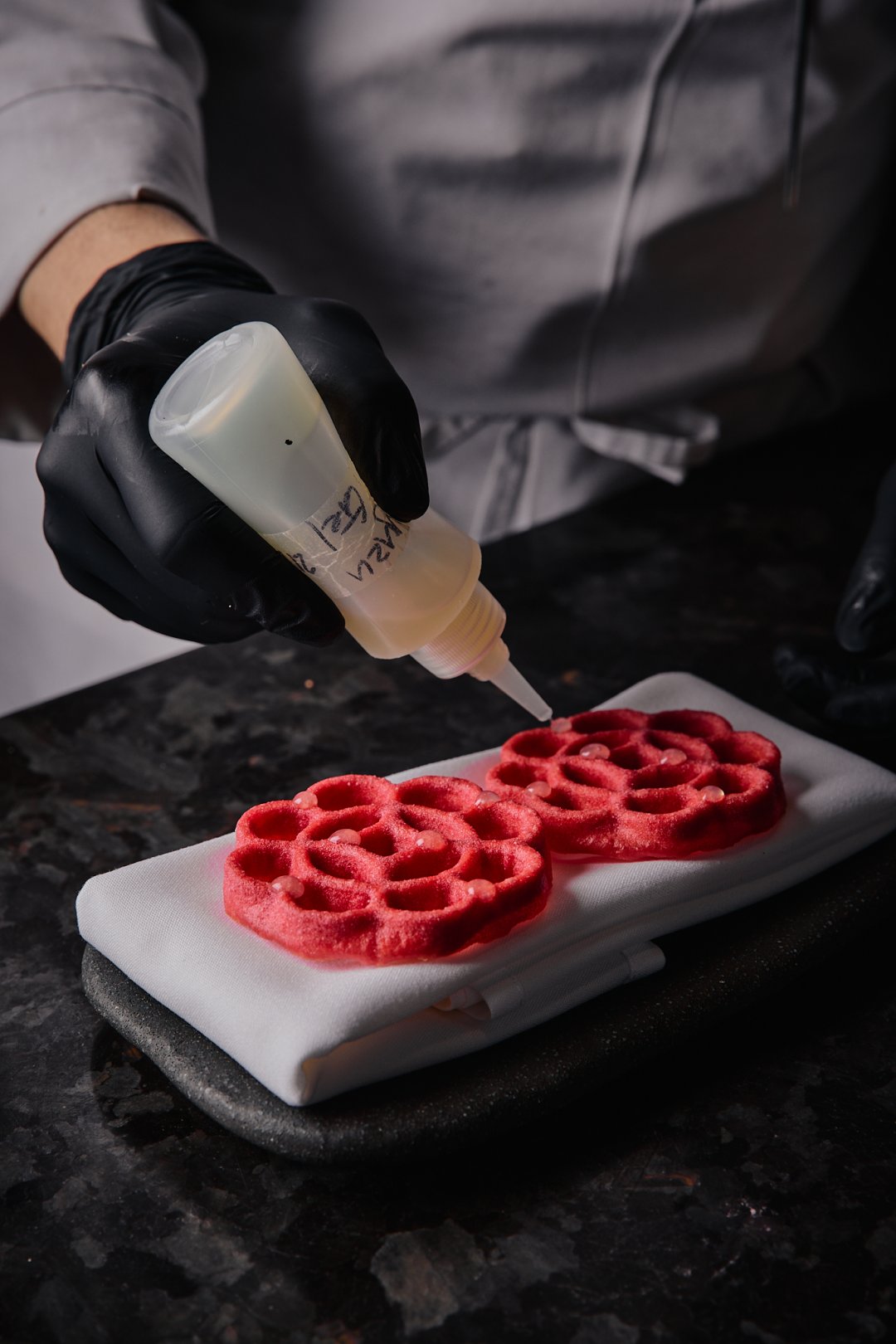
Akaiito sits on Flinders Lane and serves a chef-selected seasonal French-Japanese progression: Japanese ingredients, robatayaki charcoal cooking and contemporary French technique, available as an à la carte selection or our signature French-Japanese omakase.
What we would say plainly is this: the balance is the point. French technique gives the plate structure and restraint; Japanese ingredients and charcoal give it clarity.
The clearest signal of a well-run French-Japanese kitchen is restraint. Fewer components, each doing a defined job, beat a plate that lists eight ingredients and says nothing.
How to Book Fine Dining in Melbourne CBD Without Regrets
Booking well is mostly about asking the right questions before you commit. Use this checklist when you contact any room:
- Confirm the exact address and the nearest tram or station for a late finish
- Request a specific table type: corner, banquette or quiet end of the room
- State the occasion and any dietary requirements at the time of booking
- Ask which menu format suits your group: à la carte or a set progression
- Confirm the latest seating time against your guests’ transport
- Ask about private or semi-private space if the group is larger than four
- Check the cancellation terms before you confirm numbers
For current menus, seating times and booking details, see Akaiito’s omakase and dining information. For broader context on what defines contemporary dining in the city, City of Melbourne’s business and hospitality guidance is a useful reference, and Tourism Australia’s dining guidance covers the wider landscape for visitors.
The hard part of a fine dining booking is not finding a good restaurant. It is finding the room that matches the evening you have in mind, whether that is a client across the table or a partner across a candle.
Frequently Asked Questions
What are the best fine dining restaurants in Melbourne CBD?
The best fine dining Melbourne CBD options share three traits: a defined cooking philosophy, a room that suits the occasion, and a menu that changes with the seasons. Look for venues with a clear point of view rather than a long, unfocused menu. Akaiito on Flinders Lane, for example, builds its progression around Japanese ingredients, robatayaki charcoal cooking and contemporary French technique. Match the shortlist to your purpose: a quiet client dinner needs a calmer room than a celebratory anniversary.
Which Melbourne CBD restaurants suit a quiet client dinner?
For a quiet client dinner Melbourne CBD venues should be judged on acoustics and spacing as much as food. Ask about table separation, whether music is amplified, and whether a private or semi-private space is available before you book. A venue with a structured tasting progression also helps, because courses arrive on a rhythm rather than interrupting conversation. Confirm the seating time and any group requirements when you reserve, and mention that the booking is for a business dinner so the team can seat you accordingly.
Are there fine dining restaurants in Melbourne CBD with seasonal menus?
Yes. Seasonal menu restaurants Melbourne CBD diners return to tend to rebuild their offering around what is available rather than holding a fixed carte all year. At Akaiito, the chef-selected French-Japanese progression changes with the seasons, so the specific dishes you read about in reviews may differ from what is served on your visit. When booking, ask what is currently in season and whether the kitchen can talk you through the progression before you commit, particularly if you are planning a special occasion.
Should I book ahead for fine dining in Melbourne CBD?
Book ahead, especially for Friday and Saturday evenings and for December. Fine dining rooms in the CBD hold limited covers, and tasting-menu formats need notice so the kitchen can prepare. For a romantic dinner or a special occasion, reserve one to two weeks out; for a corporate booking or a group of six or more, allow more time and confirm the details in writing. Mention dietary requirements and any timing constraints, such as a client dinner that must finish by a set hour, when you make the reservation.
